
Taxi Tales
Understanding a City and Its Power Relations from the Back Seat, and from Stillness.

Taxis often tell you more about a city than any guided tour ever could. About everyday life, exhaustion, and about who gets picked up – and who learns to wait.
The Fear of Getting In
For a long time, taxis in Marrakech caused me sweaty palms and sleepless nights. Not out of romantic stubbornness or principle, but sheer exhaustion. I would rather get up in the middle of the night and walk for hours through heat and dust just to reach my destination than submit myself to those same negotiations over and over again. No energy to insist, in a teacherly tone, on the meter. No patience for fantasy prices, discussions, or for demanding change that suddenly no longer wished to exist.
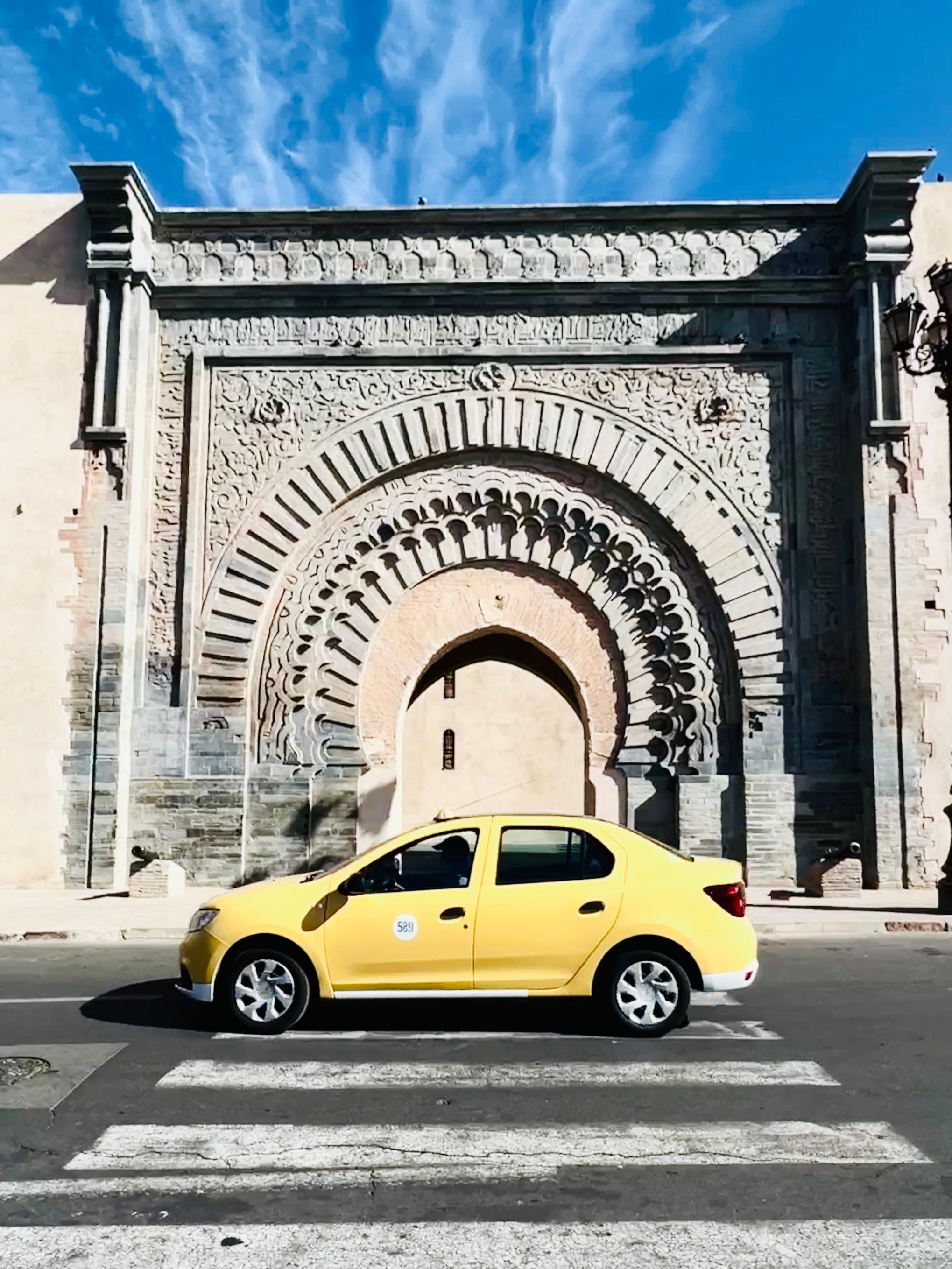
At some point I even talked myself into believing that you couldn’t really feel the city from inside a car. As if every street had to be walked in order to be understood. To this day, I still prefer to walk through Marrakech, a city that doesn’t just metaphorically throw stones in your path. But by now – especially since we no longer live in the Medina – taxis have become a welcome addition. A shortcut. A necessity. And more than that: spaces in between, between leaving and arriving. Fleeting interim zones in which encounters unfold that might otherwise never take place. And precisely because of that, they are often more real, more honest, and also more absurd than almost anything else in this city.
Market Logic on Four Wheels
By now, I know what a route should cost even without a meter. I always carry small change. The old fear has disappeared. What remains is a new one: not finding a taxi at all. Because Marrakech is in the midst of a taxi crisis. There are too few taxis and at the same time too many cars. The streets are clogged, yet taxis are scarce. And the few that are driving choose their customers carefully.
They prefer tourists. People who have been drilled to ask for the price before getting in, but who have no idea what a ride should actually cost. Asking for the price thus becomes a pure formality. Every ride turns into a speculative transaction, because it works. Because ignorance is profitable. Because forty dirhams for a ride that should cost ten still feels cheap to tourists. For the local population, however, this is a problem.
The other day we are sitting at the Koutoubia Café. Across the street stand two older Moroccan women. One leans on a crutch; both are heavily loaded with bags. For over an hour they wave at taxis. None stop. Meanwhile, tourists barely spend two seconds at the curb before a taxi brakes for them.
For a long time, my appearance gave me an advantage. As long as I was alone, taxis stopped without hesitation. But the moment I speak Darija and name a destination that isn’t the Medina or Gueliz, I too am increasingly ignored. Recently, doors even remain locked. You announce your destination through the window, and only then does the driver decide whether to unlock the door. That’s how market logic works when demand is high enough: you take whoever pays more.
Of course for airport rides, there has been an attempt to put a stop to speculation. You buy a fixed-price ticket at a counter so that the very first thing tourists experience in the city isn’t a rip-off. In reality, however, creative workarounds exist here as well. The price only applies to the big square. Beyond that, you’ll have to pay extra. Systems adapt. Always.
Global Patterns
None of this is unique to Marrakech. It reminds me of our arrival in Tel Aviv many years ago. My sister and I were so perplexed that we made it through immigration without a problem – despite an Iranian visa in the passport – that we immediately fell into the arms of the first scarecrow-like taxi driver who crossed our path. He performed something like a cheerleader routine to win us over. We should have been suspicious when we had to walk forever to reach his car. That had no taxi sign. Upon arrival, the already absurd price suddenly increased by another 200 shekels. The two backpacks in the trunk now cost extra.
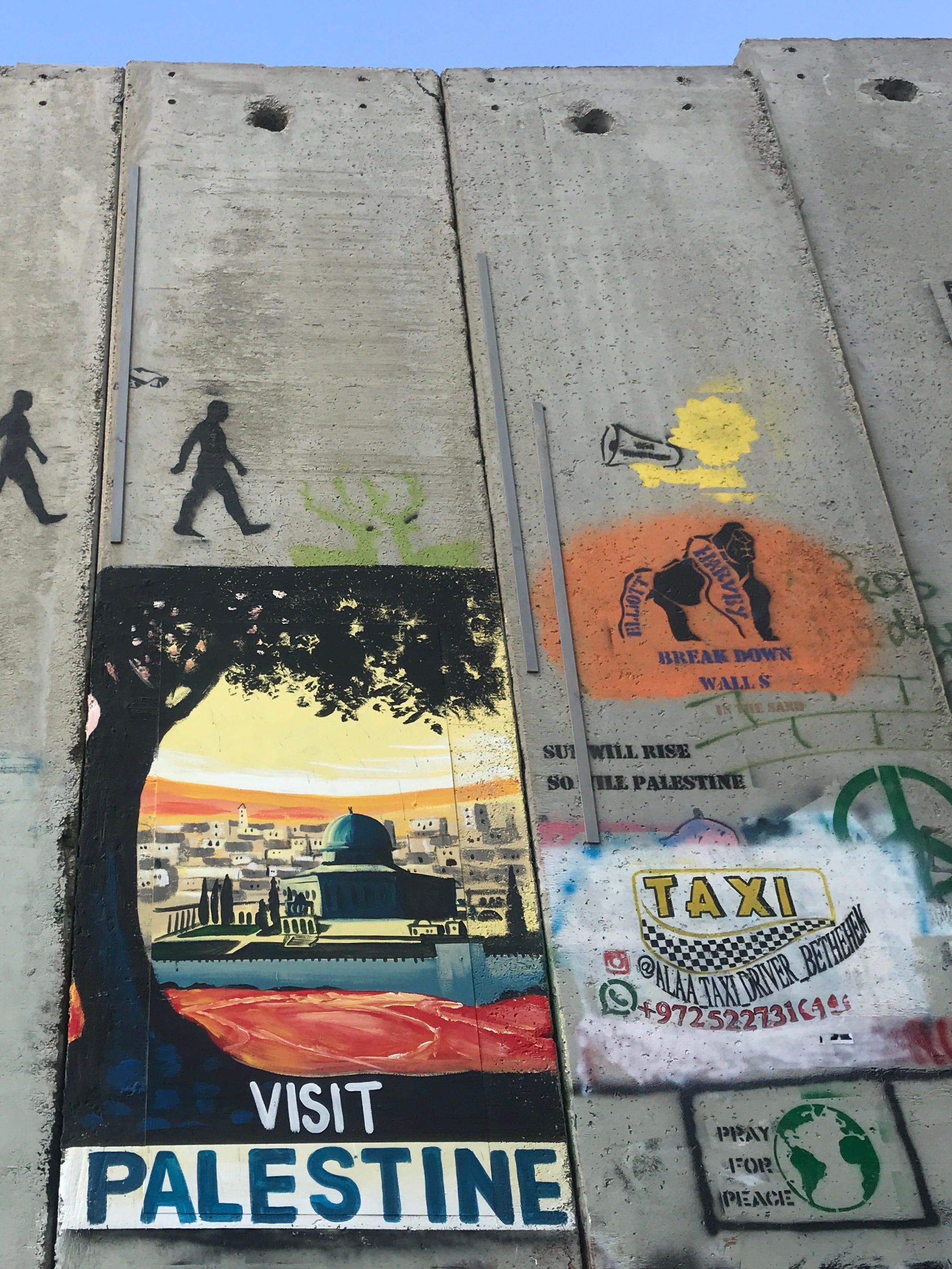
The next day, we went to the tourist information office to find out how to get to our host family in Beit Sahour in the West Bank. Confusion. Impossible. Too complicated. Too dangerous. But we weren’t discouraged. It was Shabbat, so no buses were running. We would have to take a sherut to Jerusalem, switch to a Palestinian bus there, cross the checkpoint on foot, and then change transport again on the other side. That’s what we were told.
Reality turned out to be much easier. Once we arrived in Jerusalem, our bus driver personally arranged a taxi for us. His brother, he said. No resemblance whatsoever. We passed through the checkpoint into the Palestinian territories without any problem – so smoothly that for a moment we thought this couldn’t possibly have been a checkpoint at all. The full weight of that reality only hit us later. And then we stood in front of our destination. And in front of the next taxi driver who ripped us off.
Film Noir on the Back Seat
Are taxi drivers a species of their own across borders? How often have I sat on a back seat feeling as though I had unwillingly accepted a supporting role in a film noir.
Just recently in Marrakech. After the morning panic about whether I’d even find a taxi. But then I had barely walked ten meters when one stopped. I waved. It braked. I hopped across the street like a first-grader and swung myself inside before the car quite realized what was happening. I named my destination, proud of my fluent Darija. An approving grunt from the cockpit.
The driver wore mirrored sunglasses, although the sun hadn’t even reached the rooftops yet. He smelled of a perfume that might be called Daring. Or Risk. Or perhaps simply a blend of Marlboro and musk. I briefly wonder whether he drives a taxi or whether the taxi is merely the legal fig leaf for another line of work. Maybe there’s a delivery package in the trunk that’s better left unopened. Maybe just a pot of couscous.
The music oscillates between a Raï remix and French schlager – the kind of sentimental pop ballads that seem permanently stuck in another decade. The seats are worn through, the windows half open. He drives calmly. Too calmly. His right thumb taps rhythmically against the steering wheel, but not in time with the music. More like the beat of an internal monologue. At a traffic light, he studies my reflection in the rear-view mirror. I pretend not to notice. The streets remain empty. Only the second-hand market is already in its familiar chaos, a reliable sign that the city isn’t entirely dead yet.
And then the surprise. The meter is running. Really running. I try not to look at it until I arrive. I imagine they can smell fear sweat. At the destination, I receive my change. No discussion. No confusion. I get out. The door falls shut with a heavy thud. His perfume lingers in my scarf like a souvenir. Back in the Medina, the air smells of dusty morning, fresh bread, and a faint trace of disbelief.
Other Countries, Familiar Abysses
The most spectacular encounters with this species of taxi drivers didn’t actually happen in Marrakech, but in Lebanon. Perhaps because there the back seat finally becomes a lawless space, a kind of rolling parallel society in which social rules are treated as loose recommendations at best.
One of those drivers was an openly sexist all-round entertainer. The moment we sat down, he began commenting on every woman we passed. No backside went unmentioned, no hip unnoticed. He whistled, shouted, sculpted bodies in the air with his hands as if working clay, narrating the cityscape like a live broadcast of his personal desire. Meanwhile, he talked on two phones at once – one at his ear, one in his hand – never missed a turn, and casually reached for our water. Unscrewed the bottle, drank, put it back. We sat there, folded into the back seat, suspended somewhere between shame, second-hand embarrassment, and the quiet hope that this ride would soon be over. As soon as we regained our bearings in Beirut, we fled the taxi at the next possible corner. Abruptly. Without goodbye. Without a tip.
On the way to Douma, we encountered another category entirely, one that has since earned a permanent place in our internal Taxi Driver Hall of Fame: the Romantic Nazi. His playlist consisted exclusively of swooning 1980s power ballads. Listen to Your Heart. When a Man Loves a Woman. No breaks, no irony, no escape. He sang along softly, drummed sentimentally on the steering wheel as the landscape passed by. When he learned that we were from Germany, he half-turned, smiled beatifically – and gave the Hitler salute. Not provocatively, not aggressively, but with an unsettling matter-of-factness, as if it were an internationally understood gesture, a cultural misunderstanding on wheels. Romance, nationalism, and musical sentimentality condensed into a moment no one could invent, even if they tried.
Since then, I’ve been convinced that taxi drivers worldwide form a kind of informal network. Not an organization, but a loosely knotted system of shared instincts. People who, within a few square meters of metal, are allowed to be everything at once: boundary violators, entertainers, commentators, ideological carriers, sometimes even unwilling chroniclers of the societies they drive through. The back seat as a place where world politics, everyday sexism, and absurd misunderstandings condense in the smallest possible space – and where, in the end, you still just want to arrive safely.
Back to Marrakech
Compared to that, the taxi drivers in Marrakech – the ones who take me – are almost disturbingly normal. My driver the other day sounds as if his vocal cords were preserved in formaldehyde. He comments on every traffic light like a football match, rails against standstills as if they were personal insults. The taxi is in the same condition as the streets themselves: rickety, dusty, but stubbornly alive. The women in the back seat even need a passer-by to open the door for them. From the inside, it doesn’t work at all.
And yet the car keeps going. Like an old friend who has seen too much to give up now. When the women get out, he turns toward me and ceremoniously points at the running meter. I nod appreciatively. Men, after all, like to be praised even for the most basic things. I play along.
Who Gets Left Behind – and Who Stays
The taxi crisis in Marrakech isn’t a technical problem that could be solved by adding more vehicles. It’s a symptom, but not an abstract one. It speaks of a city whose time is being redistributed. Not according to routes, but according to expectations. Not according to need, but according to willingness to pay. Mobility is no longer a given here, but a decision – and that decision is increasingly made in passing.
A taxi is no longer just a means of transport, but a filter. Whose route is worth it, whose destination counts, whose everyday life is included. The city is no longer simply crossed; it is selected. Preferred routes emerge alongside quiet dead ends. Places that are constantly serviced, and others that fall out of the system because they don’t fit the tourist grid. Not out of malice, but out of exhaustion, routine, economic logic.
What gets lost in the process is less movement than everyday life itself. The small routes, the unremarkable rides, the basic assumption that you can get somewhere without having to explain yourself, negotiate, or perform. Marrakech begins to behave like a service provider for transients. For people who come to see, not to stay. The others wait. Or walk. Or make do.
And yet taxis don’t only tell stories of inequality; they also tell stories of fatigue. Of drivers carrying too many expectations. Of a city that must constantly respond – to demand, to images, to an outside world moving faster than its own rhythm. Perhaps this is where the misunderstanding of overtourism lies: it overwhelms not only spaces, but relationships. Between driver and passenger. Between city and visitor. Between movement and meaning.
Hope cannot lie in stopping tourism or moralizing it. It lies in returning limits to it. Slowness. Friction. Moments when not everything is immediately available. When you have to wait. When you have to walk. When the city doesn’t perform, but simply exists.
Marrakech will not confront overtourism with mission statements. Not with master plans, not with campaigns, not with well-meaning appeals. It has never worked that way. The city doesn’t respond strategically, but practically. With detours. With informal solutions. With rules that apply until they no longer do.
The taxi crisis, too, will not disappear through optimization. It will shift through negotiation. Through new routines, new arrangements, new grey zones. Perhaps through other means of transport, perhaps simply because the system rearranges itself, as it always does. Not elegantly, but effectively.
Overtourism hits Marrakech where everyday life is reduced to a supporting role. But that very everyday life is also its strongest corrective. The city doesn’t belong to those passing through, but to those who need to get to work in the morning, who shop, who pick someone up, who can wait – but not endlessly. These people do not disappear. They stay. And they do not adapt without limit.
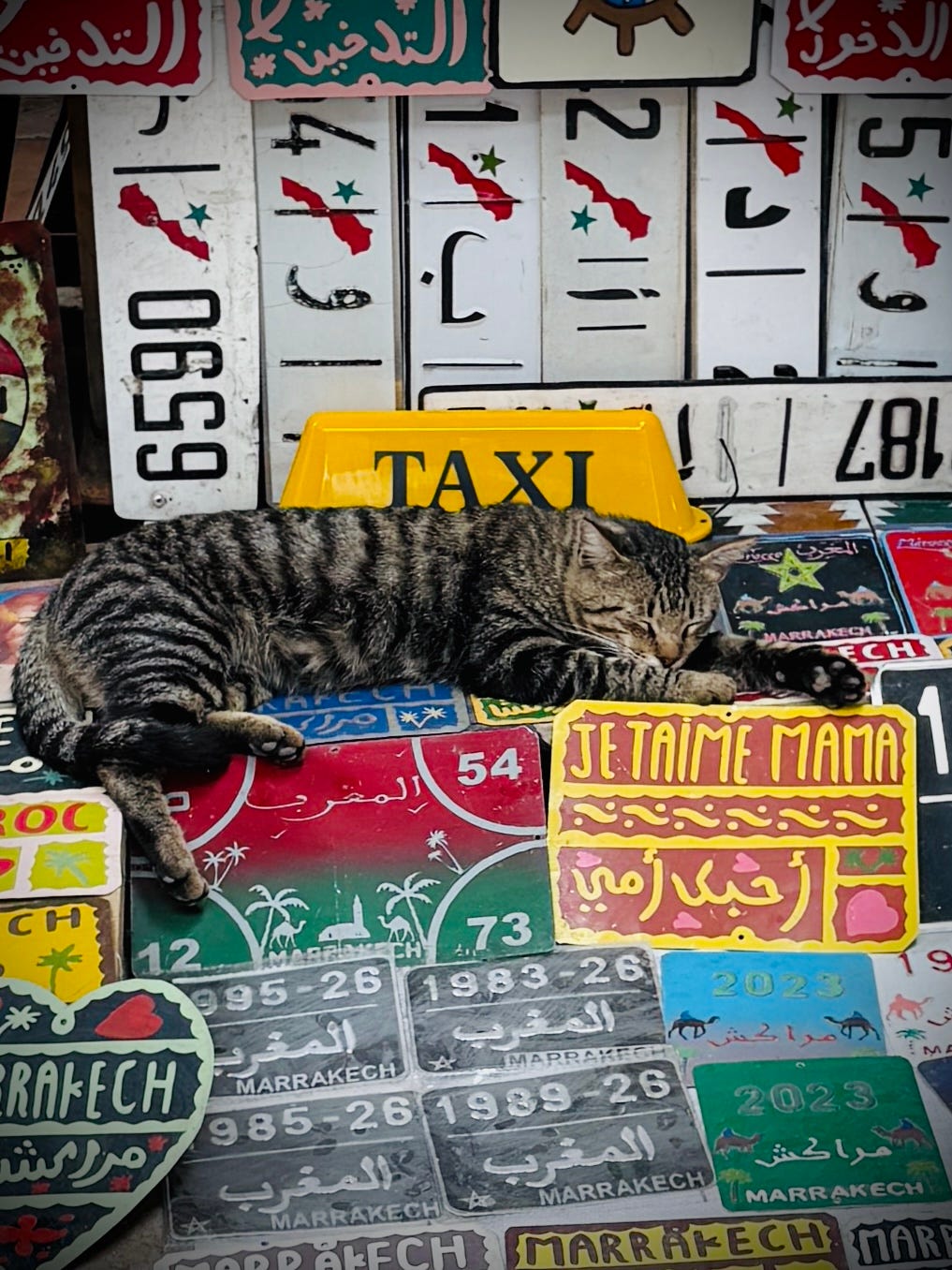
Perhaps this is the real hope: that Marrakech will never become a perfect place. That things won’t run smoothly. That sometimes you won’t get picked up. That you’ll have to negotiate, wait, walk, ask. All of that isn’t a flaw, but a resistance to total serviceability.
Taxis reveal this better than any statistic. They show where a city gives in – and where it doesn’t. Where it sells itself – and where it withdraws. And sometimes, where it simply carries on.
Marrakech will not be solved.
It will find a way to arrange itself.
And that may be the most resistant thing it can do.
_____
Hi, I’m Emilia – a Berliner living in Marrakech, creator of Marrakech Art Tour and co-editor of L7YOUT – Graffiti & Street Art in Marrakech (328 pages, Marrakech 2025).
Thanks for reading The Marrakech Diaries! You can support by showing me you’re here. Leave a like, a comment, spark a conversation or share this post with someone who’d enjoy it!
My recently updated PDF-Guides for independent travelers in Marrakech are available here.
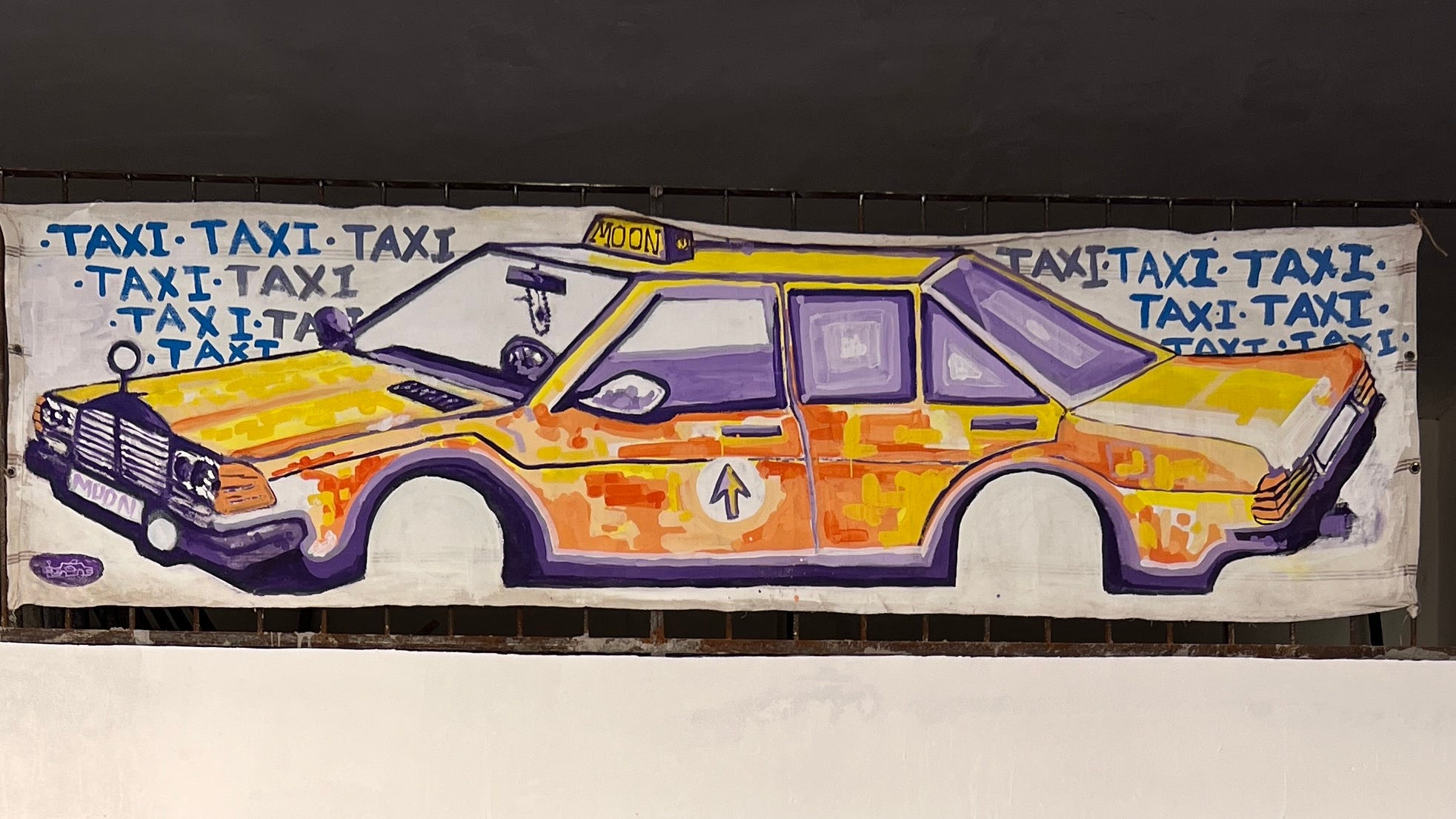
Special thanks to Barnoussi for the permission to use a photo of his artwork.